Kindergarten Furniture Set Cartoon Vector Illustrations: A Designer's Guide
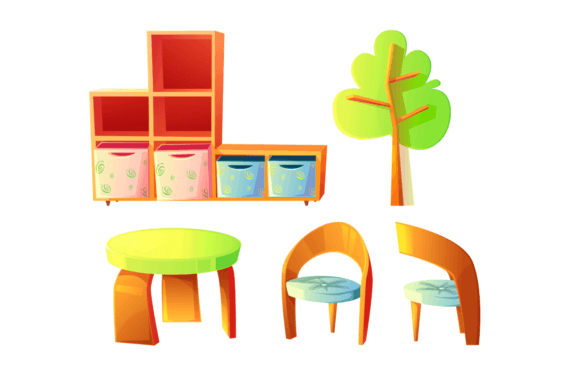
Capturing the innocence and energy of early childhood in a single visual asset is a common challenge for designers working in education, family services, or children's media. The Kindergarten Furniture Set Cartoon Vector Illustrations provide a direct and effective solution. This collection of wooden furniture pieces—desks, chairs, bookshelves, and cabinets—is rendered in a friendly, cartoon style and isolated on a clean white background. It's more than just clip art; it's a versatile design toolkit built for clarity, charm, and professional use.
Understanding the Visual Personality
The appeal of this illustration set lies in its balanced aesthetic. The cartoon style is approachable without being overly simplistic, making it suitable for audiences that include both children and the adults who make decisions for them—parents, teachers, and school administrators. The visual language uses soft, rounded edges and a warm, natural wood texture that feels tactile and safe. There's no harsh shading or complex perspective; each piece stands clearly on its own, ready to be integrated into a larger scene or used as a standalone icon.
This particular style of illustration functions much like a creative font in a designer's toolkit. It establishes a specific mood and tone instantly. The personality here is trustworthy, playful, and organized. It communicates a sense of order and fun, which is precisely the environment a kindergarten classroom aims to create. For a brand identity centered on early learning, these assets can become a foundational visual element, much like a carefully chosen typeface defines a brand's voice.
Where These Illustrations Shine: Practical Applications
The true value of any design asset is measured by its utility across different mediums. The isolated, vector-based nature of this furniture set makes it exceptionally adaptable.
Digital and Web Design
For web design, these illustrations can break up text-heavy pages on educational websites, daycare center portals, or parenting blogs. Imagine them as featured icons for service listings or as decorative elements that guide the user's eye down the page. Because they are vectors, they scale perfectly for any screen resolution, from mobile to retina displays. In social media graphics, a single chair or desk can serve as a recognizable brand mascot or a recurring visual motif in a content series about classroom tips.
Print and Editorial Work
In editorial design, such as children's activity books, parenting magazines, or school newsletters, these illustrations provide ready-made spot art. They can illustrate a story about setting up a playroom or be used to create a visual checklist for back-to-school supplies. For packaging design for educational toys or children's furniture, the cartoon style adds a layer of whimsy and approachability that can differentiate a product on a crowded shelf.
Branding and Marketing Collateral
A small business owner launching a tutoring service or a children's book author developing their brand identity can use these vectors to build a cohesive look. They work seamlessly alongside a variety of fonts. Pair them with a friendly sans serif font for a modern, clean feel, or with a rounded script font to enhance the playful, handwritten quality. The consistency of having a pre-matched furniture set ensures that all marketing materials—from business cards to website banners—look unified and professionally considered.
Making the Right Choice: A Practical Evaluation
Before incorporating any illustration set into a project, a thoughtful evaluation is necessary. This isn't just about liking the style; it's about ensuring it serves the project's goals effectively.
First, consider the project's audience and tone. Is the goal to appeal directly to young children, or to the adults who care for them? The Kindergarten Furniture Set Cartoon Vector Illustrations strike a balance, but if your project demands a more sophisticated, minimalist, or photorealistic approach, this style might not be the ideal fit. The cartoon aesthetic inherently sets a certain expectation.
Next, assess the technical requirements. Since these are vectors, they are infinitely scalable and editable. This is a major advantage for any professional work. You can change colors to match a specific brand palette, adjust individual elements, or combine pieces to create custom scenes. However, always check the file formats provided (like SVG, AI, or EPS) to ensure compatibility with your software.
Finally, review the licensing. Most premium illustration sets come with clear commercial licenses, but it's crucial to understand the terms. Can you use them in end products for sale? Are there any restrictions on the number of prints or impressions? For entrepreneurs and small business owners, clarifying this upfront prevents legal headaches later. Using assets with a clear, permissive license is as important as using a properly licensed commercial font.
Integrating Assets for Cohesive Design
The most effective designs feel intentional, where every element supports the others. When using these furniture illustrations, think about how they interact with your typography and color scheme. If your project uses a bold display font for headlines, the illustrations' simple lines will provide a nice visual rest. If your color palette is limited, you can recolor the vectors to serve as accent colors, tying the imagery directly to your typographic choices.
For a project focused on logo design for a childcare center, one of these furniture pieces could be stylized and simplified into a lasting icon. Paired with a warm, approachable typeface, it creates a complete and memorable mark. The key is to treat these illustrations not as an afterthought, but as integral components of the visual system, with the same care you'd give to selecting a premium font family with multiple weights and styles.
In the end, the goal is to create a visual experience that feels both delightful and trustworthy. The Kindergarten Furniture Set Cartoon Vector Illustrations offer a specific tool for achieving that balance. By understanding their strengths, evaluating their fit for your audience, and integrating them thoughtfully with your other design choices—typography, color, and layout—you can leverage them to build more engaging, professional, and effective creative projects.