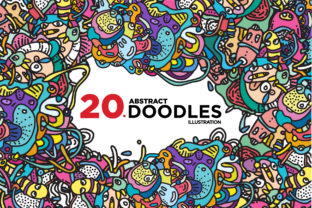
Unlock Creative Potential with 20 Abstract Doodle Illustrations
Every designer, marketer, and content creator hits a wall sometimes. You need a visual element that's engaging but not distracting, unique but not overwhelming. That's where a versatile asset like a collection of abstract doodle illustrations comes in. This particular set of 20 Abstract Doodle Illustrations is designed to be that flexible spark for your projects. Think of it as a toolkit of spontaneous, energetic line work that can add personality and movement to almost any layout. The style is loose, playful, and modern—characterized by flowing lines, geometric fragments, and organic shapes that feel hand-drawn yet polished. It’s not about precise representation but about evoking a feeling of creativity, connection, and dynamic energy.
Where These Doodle Illustrations Truly Shine
The beauty of abstract doodles is their chameleon-like ability to adapt. This collection isn't locked into a single mood; it can be tailored to feel whimsical, professional, or avant-garde depending on context. For web design and landing pages, these illustrations can break up text-heavy sections, guide the user's eye, and create visual interest without slowing down load times. Use them as subtle background elements or as featured graphics to highlight a call-to-action. In social media graphics, they become perfect companions for quotes, announcements, or carousel posts, adding a layer of visual storytelling that static photos can't match.
For brand identity and logo design, abstract doodles offer a way to build a recognizable visual language. Imagine incorporating one or two of these elements into your brand pattern, using them on business cards, or as part of your packaging design. They communicate a brand that is approachable, innovative, and human-centric. Publishers and content creators can use them to embellish book covers, create chapter headings, or design engaging infographics. Even in editorial design, a well-placed doodle can transform a dense article into an inviting read, improving readability by providing visual rest points.
Practical Guidance for Using Abstract Assets
Integrating a new design asset effectively requires a bit of strategy. First, evaluate the visual hierarchy of your project. These doodles work best as supporting actors, not the main star. They should enhance your core message, not compete with it. A good test is to squint at your layout; if the doodle jumps out before your headline, scale it back or reduce its opacity.
Next, consider font pairing. The organic, handcrafted feel of these illustrations pairs beautifully with clean, modern typography. Try combining them with a sturdy sans serif font for a balanced, contemporary look. For a more eclectic vibe, a simple serif font can create an interesting contrast between classic structure and free-form art. Avoid pairing them with highly ornate or complex script fonts, as this can create visual clutter and harm readability.
The technical delivery matters too. This collection arrives as a single zipped file (48.12 MB) containing editable Vector AI and EPS files, plus JPG previews. This is crucial for commercial use. The vector format means you can scale these illustrations to any size—from a tiny favicon to a massive billboard—without losing a single pixel of quality. You have full control to change colors, modify shapes, and truly make them your own. Remember, the file includes only the vector illustrations; fonts and photos shown in previews are for demonstration only.
Finally, think about consistency. Using a few illustrations from the same set across a campaign or a brand's touchpoints creates a cohesive visual identity. It builds brand recognition and professionalism. Whether you're a small business owner crafting your first marketing materials, a hobbyist designing invitations, or a designer building a client's packaging design, having a reliable set of abstract elements streamlines your workflow and elevates the final product. The goal is to use these assets to tell a better story, engage your audience more deeply, and solve visual problems with a touch of creative flair.